

The recent collapse of the Global Plastics Treaty talks might seem like just another sign of these dark times. The latest round of negotiations in Geneva ended without a binding international agreement to reduce the production and toxicity of plastics.
The frustration and disappointment of the member states of the High Ambition Coalition to End Plastic Pollution and the majority of observers was palpable.
But this round was a draw. We also denied a victory to the petrochemical industry and the petrostates (mainly the United States, Saudi Arabia and Russia) who sought a formal agreement to basically do nothing, and walked away empty handed.
So the prospect still remains for reaching a meaningful Plastics Treaty in the future, approvable by a super-majority of countries. And the resulting uncertainty frees the European Union, U.S. states and other policy leaders to continue market-driving policy leadership.
In the meantime, let’s review the evidence that we are winning on plastic pollution.
Declines in Production and Consumption
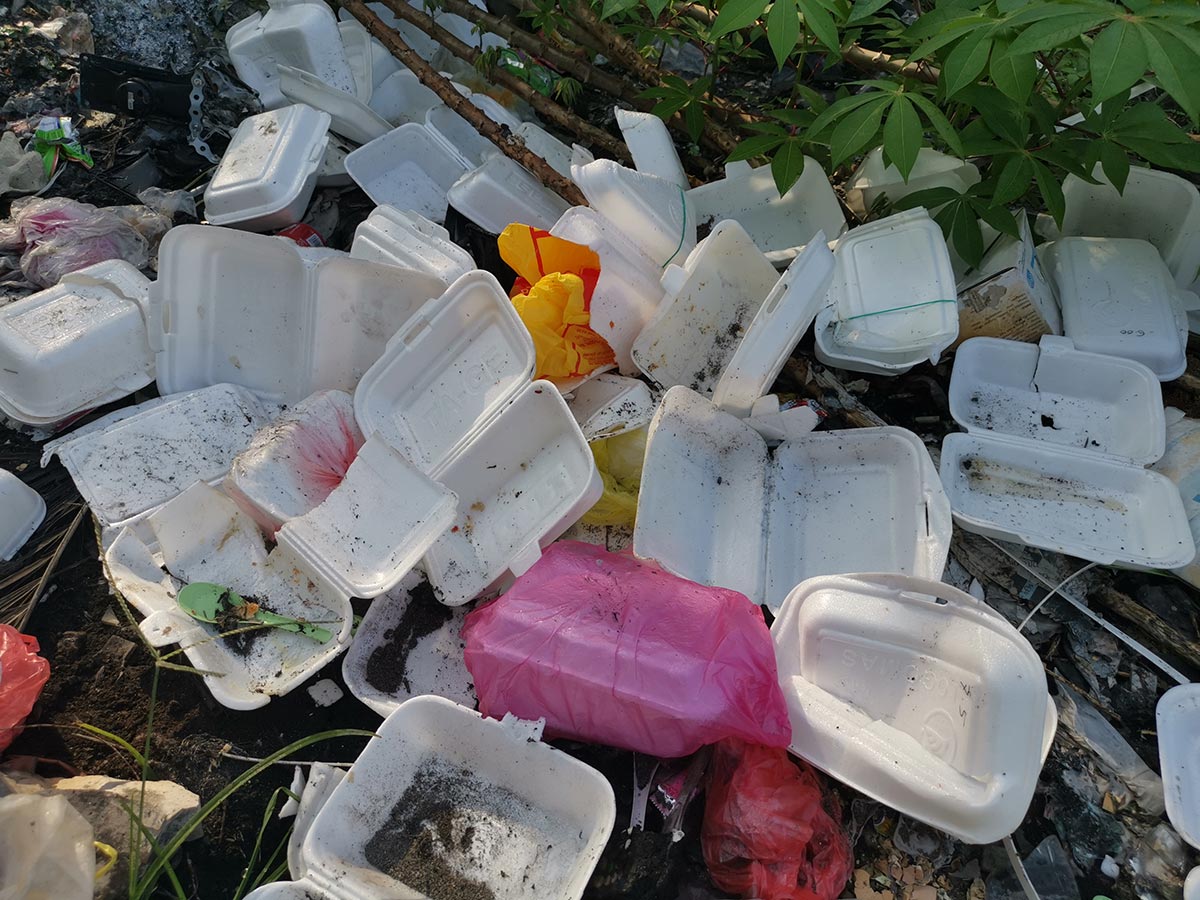
The production and use of polystyrene plastic has declined by more than 30% in the last 13 years in North America, and probably through much of the world. Consider the benefits – bending the curve down on this commodity plastic has already reduced:
- about 30 million metric tons per year in greenhouse gas emissions
- nearly 10% of all use of benzene, the cancer-causing feedstock for styrene
- serious health risks to workers and residents from exposure to three carcinogens
- injustice from cumulative impacts on communities of color and low-income people
- migration of at least 35 petrochemicals into food and beverages from direct contact
- land and ocean litter from pieces of polystyrene and styrofoam plastic
- dispersion of micro- and nanoplastics throughout the environment and our bodies
The drivers of polystyrene reduction are clear – public policy mandates, corporate policy goals, third-party standards, and innovative technology changes have all contributed to achieving these reductions.
Declines in toxicity
Population exposure to several notorious plastics-related chemicals is significantly down, according to human biomonitoring data. The deaths, disabilities and disease from exposure to just five plastic chemicals cost about $250 billion in health care costs in the United States in 2018.
That includes high-volume plasticizers used in PVC plastic (such as DEHP and DBP), a major building block chemical for polycarbonate plastic and epoxy resins (BPA), and some ‘forever chemicals’ in the large PFAS class that were used to make Teflon and other fluoropolymers and in coatings for food packaging and clothing (PFOA and PFOS).
Declining exposure to these plastic chemicals is significantly reducing the incidence of chronic diseases, disabilities and early deaths linked to these chemicals. The associated savings in health care costs are pronounced.
The drivers of reduced plastic-related toxicity are also straightforward – we need strong independent science, public policy mandates, corporate policy goals, and innovative safer chemistry to further reduce toxicity.
“When you get to the top of the mountain, keep climbing.”
This Zen proverb helps us celebrate these gains with some perspective. The battle against the overproduction and toxicity of plastic is not yet complete, and many other plastics and chemicals require similar actions. Yet the positive trends and benefits are undeniable and the means to achieve reductions are now proven, tried and true.
Much more can be done to detoxify the plastics life cycle. Bending the curve down on plastics production is within reach. So is a meaningful Global Plastics Treaty.
continue reading
Related Posts

Polystyrene plastic impacts health, climate, and justice at every stage

Thanks to a series of bad bets by the chemical industry, conditions are now ripe to bend the curve down on plastic production.
Polystyrene is the only major plastic whose production and domestic use are steadily declining. Let’s examine why.