“… the arc of the moral universe is long,
but it bends toward justice.”
– Rev. Martin Luther King, Jr., 25 March 1965 speech delivered on the steps of the Alabama State Capitol in Montgomery at the end of the march from Selma
Mission & Goals
The MISSION of Bend the Curve is to transform the petrochemical industry so that it no longer harms people and the planet. We envision a just transition to sustainable production that protects human health, racial justice, and climate progress. To bend the curve and reverse harmful trend lines requires radical optimism fueled by persistent will.
Our GOALs are to:
- Slash the use and production of petrochemicals and petrochemical plastics
- Ensure a just transition for workers and communities whose prosperity’s at stake
- Advance market adoption of safer, more sustainable materials, products and solutions
We must take the long view. The industry began turning oil, gas and coal into chemicals and plastics more than 100 years ago. It will likely take a 100-year campaign to transform the petrochemical industry to sustainable production. Compare this challenge to other historic transformative campaigns. It took more than 200 years to end slavery in America. More than 80 years of organizing finally won women’s right to vote in the United States.
“… to ameliorate the intense and socially unrewarding impact of the petrochemical industry on the environment, on health, and on society generally will require that the rapid and continuing growth of this industry be substantially curtailed – a process which will be as difficult as it is important to environmental survival.”
Dr. Barry Commoner, “The Impact of Chemical Technology,”
presented at the American Chemical Society Southeastern Regional Meeting, Charleston, SC, 8 Nov. 1973
Barry Commoner’s call to action more than fifty years ago places us about halfway through the 100-year campaign. Or perhaps it began shortly thereafter, when federal agencies finally cracked down on cancer-causing vinyl chloride used to make PVC plastic. In 1974, the Occupational Safety and Health Administration (OSHA) ordered a 500-fold reduction in allowable worker exposure to vinyl chloride. In 1976, the Environmental Protection Agency (EPA) required a 95% reduction in vinyl chloride air emissions under the Clean Air Act.
Strategy
Our STRATEGY relies on the power of people, science, and markets. We’ll never convince ExxonMobil, Dow, or other chemical manufacturers to voluntarily reduce their production of petrochemicals and plastics. But the companies and institutions that use plastics are persuadable. And when market leaders move so do policy makers at the local, state, and eventually federal level. That’s why Bend the Curve advocates a demand-side strategy—to increase market adoption of safer solutions.
“It will take a massive effort to move society from corporate domination, in which industry’s rights to pollute and damage health and the environment supersede the public’s right to live, work, and play in safety. This is a political fight. The science is already there, showing that people’s health is at risk. To win, we will need to keep building the movement, networking with one another, planning, strategizing, and moving forward. Our children’s futures, and those of their unborn children, are at stake.”
Lois Marie Gibbs, founder of the Center for Health, Environment & Justice, from Learning from Love Canal: A 20th Anniversary Retrospective, 1998
LEADERSHIP FOR IMPACT
Our Team
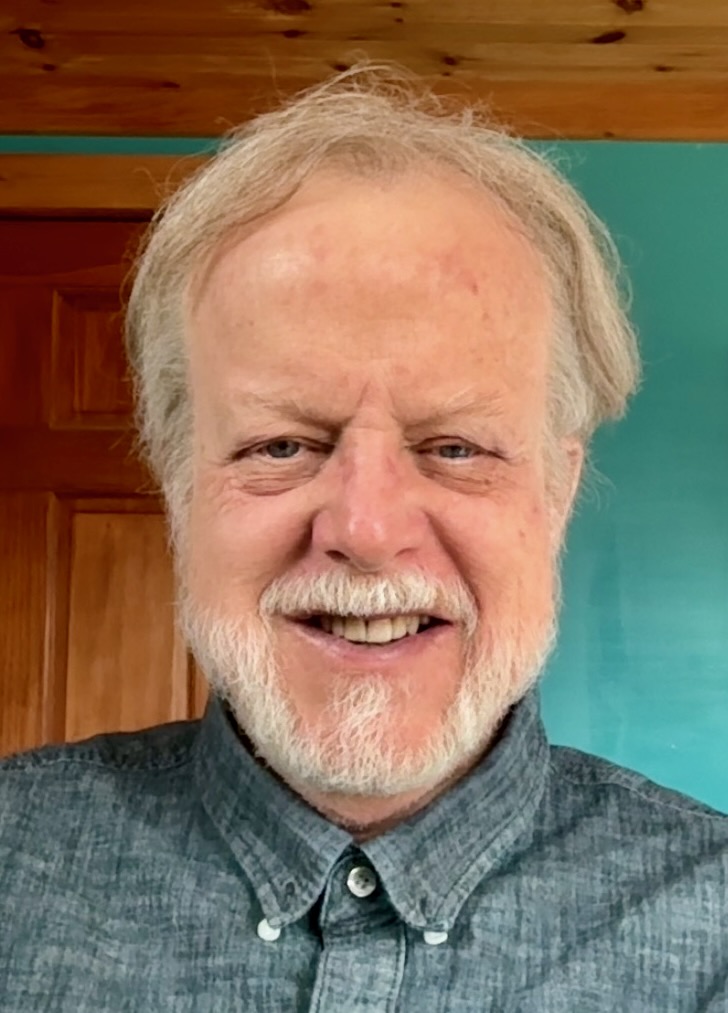

Our Founder, Mike Belliveau (he/him), has advanced strategic campaigns for environmental health and justice for more than forty years. His work has engaged impacted communities and workers in shaping public and corporate policies across the United States. He’s helped major corporations in the retail, food, and beverage industries to phase out chemicals of high concern and slash plastic pollution. He’s a consummate research analyst, policy advocate, issue campaigner, science translator, nonprofit leader, coalition builder, social entrepreneur, writer, and strategist.
Mike was the founding executive director of the Environmental Health Strategy Center, now known as Defend Our Health, where he set the pace for state-based chemical policy reform to replace mercury, brominated flame retardants, BPA, phthalates, and PFAS with safer alternatives. He co-founded Safer States to drive similar reform nationwide.
Dominque Howse, M.S., MBA (she/her), is an award-winning social innovator and equity-driven communications executive, operating at the intersection of People Power and policy change. With a career spanning more than 15 years across the United States and the Global South, Dominque uses communications strategy and policy analysis to translate collective community voice into institutional influence. She drives a leadership philosophy anchored in a singular conviction: that frontline communities must be the primary architects of transformative change.
As a seasoned strategist and Director of Communications and Digital Strategy at Bend the Curve, Dominque leverages human-centered design and authentic communication to align people, planet, and equity. Her executive blueprint includes elevating local struggles to national policy discussions at the White House. As a trans-disciplinarian, she consistently bridges the gap between high-level institutional systems and grassroots realities. By centering social justice and human dignity, Dominque collaborates to create powerful messaging frameworks that move bold ideas into measurable, transformative change.
Howse holds an Executive MBA from the Fisher College of Business at The Ohio State University, a M.S. in Urban Policy Analysis and Management from The New School, and a B.A. in Mass Communication from Jackson State University.
strategic advice, shared experience and expertise
Our Advisory Board

Yvette Arellano
Yvette Arellano is a Mexican American Gulf Coast organizer based in Houston, Texas who works on toxics, right-to-know, and human rights issues. They are the founder and executive director of Fenceline Watch, an environmental justice organization dedicated to the eradication of toxic multigenerational harm on communities living along the fenceline of industry. Yvette led a 2015 campaign against H.R.702, which opened the floodgates to U.S. crude oil exports. They contributed to the Center for International Environmental Law report ‘Plastic & Health: The Hidden Cost of a Plastic Planet’. Yvette has testified before EPA, and state and federal legislative bodies about public health impacts from toxic exposure and solutions. Their advocacy aided crisis response after chemical disasters and efforts to stop fossil fuel expansions, new export terminals and offshore drilling. Yvette graduated from University of Houston with a degree in political science.
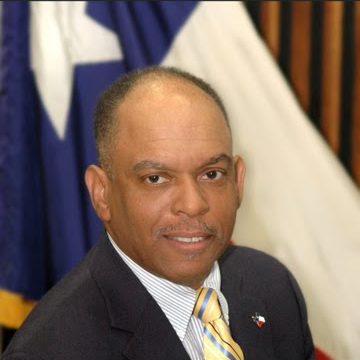
John Beard, Jr.
John Beard, Jr. is the founder, president, and executive director of the Port Arthur Community Action Network (PA-CAN), serving the Port Arthur/Southeast Texas area as a community advocate, focusing on environmental issues and community development. He is an active member of his community and has dedicated his life and career to serving the public. He has over thirty-two years of public service as an elected official, nine as city councilman and mayor pro-tem, with current and previous service on numerous boards and commissions with the City of Port Arthur. John worked thirty-eight years in the petrochemical industry, with practical training and experience in maintenance services, process operations; health, safety and environmental issues; and emergency management and incident command systems. He was educated in the Port Arthur public school system and studied political science and economics at Lamar University.
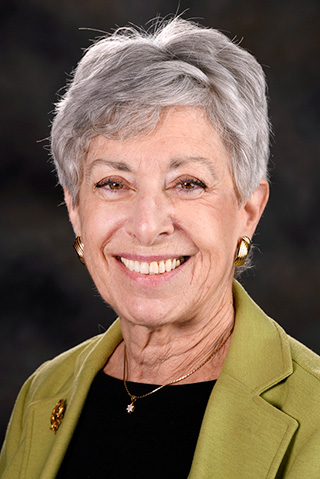
Linda Birnbaum, PhD, DABT, ATS
Dr. Birnbaum, a certified toxicologist, served for ten years as Director of the National Institute of Environmental Health Sciences (NIEHS) and the National Toxicology Program (NTP). In those roles Birnbaum oversaw federal funding for biomedical research to discover how the environment influences human health and disease. She’s a Scholar in Residence at Duke University. Birnbaum has authored more than 600 peer-reviewed publications. Her research interests include pharmacokinetic behavior of environmental chemicals, mechanisms of actions of toxicants, including endocrine disruption; and linking of real-world exposures to health effects. She was elected to the Institute of Medicine in 2010 and as a Fellow of the American Association for Advancement of Science in 2022. She earned a PhD and MS in microbiology from University of Illinois and a biology degree from University of Rochester.
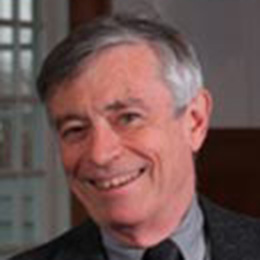
Ken Geiser, PhD
Dr. Geiser is an internationally recognized expert on pollution prevention, clean production, green chemistry, and industrial chemical policy. He’s a Professor Emeritus of Work Environment and past Distinguished University Professor at the University of Massachusetts, Lowell. He co-founded the Massachusetts Toxics Use Reduction Institute and the Lowell Center for Sustainable Production. He’s authored two books, Materials Matter: Toward a Sustainable Materials Policy and Chemicals without Harm: Policies for a Sustainable World. Dr. Geiser is one of the primary authors of the United Nation Environment Program’s Global Chemicals Outlook and has served as a Project Coordinator for the United Nations Environment Program’s Chemicals in Products Project. He has advised many government agencies and nonprofit organizations. Dr. Geiser earned his PhD and master’s degree in urban planning from Massachusetts Institute of Technology and a degree in architecture from University of California, Berkeley.
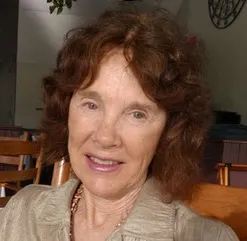
Lani Graham, MD, MPH
Dr. Graham is a retired family physician who serves on the Public Health Committee of Maine Medical Association and the board of Maine Physicians for Social Responsibility. She is the former Director of the Maine Bureau of Health, where she issued the first-in-the-nation statewide health advisories for mercury contamination of fish caught in lakes and rivers. Her work has focused on several environmental health hazards, including dioxin from paper mills, the pesticide daminozide (alar), radon testing in water, and childhood lead poisoning prevention. Dr. Graham was appointed by Maine Governor Janet Mills to serve on Task Force on the Threats of PFAS Contamination to Public Health and the Environment. Lani is a tireless policy advocate for solutions to toxic chemicals, environmental health, climate change, tobacco use, gun violence, criminal justice, and other public health and medical issues.
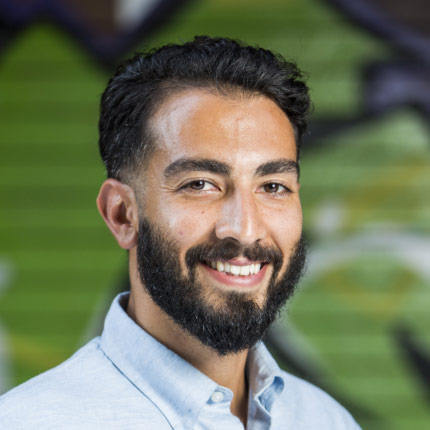
Muhannad Malas, MPH
Muhannad Malas is the director of law reform at Ecojustice, the largest environmental law nonprofit in Canada. As an environmental justice campaigner, he seeks system change to undo decades of environmental racism and government inaction. Most recently he helped the Aamjiwnaang First Nation halt health-threatening benzene emissions from a petrochemical plastics plant in the Chemical Valley of Sarnia, Ontario. He previously worked as a senior climate campaigner at Stand.earth where he worked to reduce greenhouse gas emissions from the fashion sector supply chain. Before that he directed the toxics program at Environmental Defence where he worked to strengthen corporate and government policies to reduce the use of toxic chemicals. Muhannad earned a BSc in human biology and a Master of Public Health degree from University of Toronto. He teaches global health governance and advocacy courses at McMaster University.
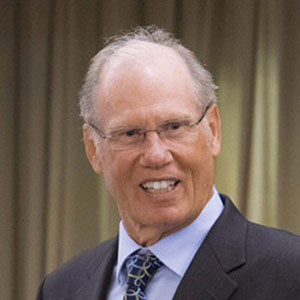
Roger McFadden, MS
Roger McFadden is a scientist, technical trainer, and business leader who has helped the cleaning industry and retail sector to reduce their use of toxic chemicals in favor of safer, more sustainable alternatives. As chief science officer of McFadden and Associates, Roger teaches professional green cleaning, environmental health and safety, and green chemistry to public agencies, nonprofit institutions, and private companies. He formerly served as vice president and senior scientist at Staples, Inc. where he led chemical policy development. Prior to that he held positions as chief scientist for office supplies wholesaler Corporate Express, senior scientist and R&D director for Coastwide Laboratories, and as a consulting chemist and product engineer for several chemical manufacturers. In 2023, Roger was awarded Safer Choice Partner of the Year by the U.S. Environmental Protection Agency in recognition of his contribution to green cleaning.
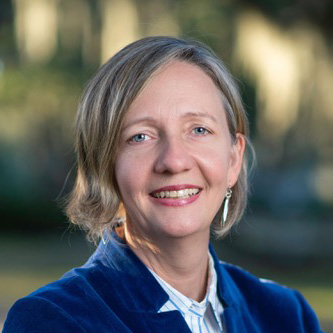
Anne Rolfes
Anne is the founder and Director of Louisiana Bucket Brigade, which uses grassroots action to hold the petrochemical industry and government accountable for the true costs of pollution. Anne began her career in Nigeria, collaborating with local communities to address oil companies’ destruction of the Niger Delta. She returned to Louisiana to collaborate with women along Cancer Alley on environmental justice. Anne was born and raised in Lafayette, Louisiana where many people made their fortunes from the oil industry. She has seen the wealth and the poverty created by oil production and seeks a phase-out of fossil fuels in her lifetime. She has a master’s degree in international development from Tulane University and has twice testified before Congress. She has received the Jane Bagley Lehman Award for Public Advocacy and the Robert Wood Johnson Community Health Leader Award.
Careers
We’re recruiting! The following positions are open:
Student Interns.
We are looking for a few high-performing scholars for the fall and spring semesters with interest and capacity in the following areas:
- Market & Corporate Research – ideal for an MBA or sustainable business student
- Environmental Justice – document and help correct disproportionate impacts
- Science & Technology – research chemical and climate impacts and solutions
- Public & Corporate Policy – research and help advocate necessary changes
Serious student intern queries only are welcome at recruitment@bendthecurve.org.