

The world is awash in too much plastic. Yet, thanks to a series of bad bets by the chemical industry, conditions are now ripe to bend that curve down. But bold action is needed in the next five years. Otherwise the industry will lock in excess production for decades more.
Consider the scope and scale of plastic pollution, which stretches every planetary boundary. Mismanaged plastic waste has visually assaulted public attention. But toxic chemicals and micro- and nano-scale particles are growing public health concerns. Add the unjust impacts from toxic air and water pollution, fires and explosions, and rising greenhouse gases emissions during production.
At every stage, plastics harm human health and climate progress, from the extraction, processing and refining of fossil resources; to the manufacture of petrochemicals and plastics, and the use and final disposal of plastic products and packaging.
The rapid, continual increase in plastics production, far exceeding the population growth and other materials, has only heightened the urgency for solutions.
It’s no wonder then that a super-majority of the world’s nations are striving to reach a binding global treaty to reduce the production and toxicity of plastics. (They’ve been blocked so far by the petrostates led by the United States, Saudi Arabia, and Russia.)
But all this attention on the problem over-shadows a more hopeful reality. A profitability crisis of its own making has left the petrochemical industry vulnerable to change. The end result could be a radical transformation that for the first time reduces the amount of plastics produced.
That means that if change agents act boldly, peak plastics production could be achieved within a decade. Let’s examine the conditions and drivers that have created this unprecedented window of opportunity.
Consider first that plastics drives much of our materials economy. In turn, petrochemicals – substances derived from oil, fossil gas, and coal – fuel the plastics crisis. We know that because plastics production consumes about half of all chemicals produced (by mass). And for high-volume petrochemicals, plastics suck up as much of 85% of all ethylene, benzene, and p-xylene, for example.
Reflect now on the largely untold story (except in the trade press) that seems shocking in the face of the growing mountains of plastic waste. The petrochemical industry is suffering from its longest and deepest downturn in profitability in its hundred-year history!
The industry has dramatically over-built capacity to produce petrochemicals and plastics, even while demand growth has softened and slowed.
Supply now greatly exceeds demand. Drunk on cheap (subsidized) shale gas used as feedstock (raw material), U.S. producers built more chemical plants than anyone needs. For strategic reasons, China continues to dramatically expand petrochemical capacity(to promote self-sufficiency and maintain social stability). Saudi Arabia and its neighbors are also building new petrochemical plants (to offset a future decline in fossil fuel markets).
To remain profitable, most petrochemical plants prefer to operate at 80% to 90% of their productive capacity or higher. Since 2021, the capacity utilization of the global chemical sector has dropped to just a bit more than 60% to 70% of plant capacity, even lower depending on the region and chemical. As a result, the industry is losing fistfuls of money compared to historic highs.
This wound was self-inflicted. The petrochemical industry made a series of bad bets and ignored challenges that now threaten its very future. They failed to anticipate:
1. The high-growth economy in China burst like a bubble in 2021, slashing the largest source of future market growth for petrochemicals;
2. China built its own petrochemical capacity, drying up export markets for U.S. producers and others;
3. Consumers became repelled by highly-visible plastic pollution, resulting in a popular culture shift that views plastics as dangerous and wasteful;
4. Policymakers began phasing out single-use disposable plastics and requiring minimum recycled content, cutting into the largest end-market, plastic packaging;
5. There’s a growing recognition that plastics production threatens climate change, accounting for more than 5% of all direct greenhouse gas emissions globally;
6. Scientists concluded that widespread exposures to plastics-related chemicals harm human health, especially for children, and so may micro- and nano-plastics;
7. Consumer brands have started to reduce their plastics use, substitute with more sustainable materials, and increase use of recycled and bio-based plastics; and
8. Aging populations in east Asia, Europe and the United States may lower demand for more stuff, slowing the growth for ever-increasing amounts of plastic.
All of these trends have reduced demand for petrochemicals even while the industry continues to expand capacity to produce more and more. Adding to its financial woes, the chemical industry lags far behind every other sector in pursuing net-zero greenhouse gas emissions to stem the climate crisis. This delay simply increases the demand and cost of decarbonizing when the chemical industry can least afford it.
This isn’t the normal self-correcting boom-bust cycle of excess chemical demand followed by over-supply. Instead, the petrochemical industry is caught in a perfect storm of its own making. The industry fears a future restructuring of unknown dimension with “recovery” not expected until near the end of the decade or by the early 2030’s.
Over-supply and reduced demand has pummeled industry profit margins. As a result, older and dirtier petrochemical plants are closing, especially in Europe and Asia. The growth rate in plastics production and construction of new petrochemicals plants has also slowed.
These conditions create a once-in-a-lifetime opportunity to permanently cap and begin to steadily reduce the production of fossil plastics within a decade.
If society makes a concerted effort to further reduce demand for plastics, the industry will be forced to chase a never-ending gap between how much they can produce (plant capacity) and how much they actually produce. In that scenario, the petrochemical plants that are more expensive to operate, which also tend to be more polluting, will continue to close due to low profits. And the buildout of new production facilities will slow to a crawl.
In fact, expert analyses show that total demand for chemicals (other than ammonia) can be slashed by one-third to one-half and plastics production reduced by 20% to 50% through elimination of unnecessary uses, reuse and refill systems to replace single-use disposables, substitution with safer and more sustainable materials, and an increase in recycling rates.
And what about essential uses of plastics? Better alternatives are not yet available for some applications. For currently unavoidable uses of plastics, significant reductions in plastics-related harm are still possible and needed.
For example, the virgin fossil resources (oil, gas, and coal) used to make 99% of plastics can be replaced by renewable carbon feedstocks. Defossilizing plastics will dramatically reduce net greenhouse gas emissions and air pollution health hazards.
Depending on the scenario modeled, between 26% and 82% of fossil carbon in chemicals, including plastics, could be replaced with renewable carbon by 2050. This renewable carbon could come from diverse sources – sustainable biomass, carbon captured from point source emissions, direct air capture of carbon, and solid waste. Another plausible goal for 2050 aims for renewable carbon to replace 95% of fossil carbon in chemicals and plastics. In that scenario, 20% of renewable carbon would be derived from bio-based sources, 25% from all forms of CO2 capture, and 50% from recycling of plastics and chemicals derived from renewable feedstocks.
The petrochemical industry, increasingly controlled by major oil companies and state-owned enterprises, won’t stand idle.
The petrochemical industry has a different future in mind. The industry plans to lock-in ever-increasing petrochemical production as a hedge against declining fuel markets for transportation and electricity. The industry’s business-as-usual survival strategy includes:
· Keep closing plants to increase capacity utilization and reduce over supply
· Build even bigger petrochemical complexes to chase economies of scale
· Use even more fossil gas as a cheaper feedstock than naphtha from crude oil
· Back integrate with oil and gas production to mask any losses on chemicals
· Cede petrochemical production to international and state-owned oil companies
That’s an industry recipe for an even more plastic-polluted planet with rising harm to health, climate and justice, and with even less accountability to the common good.
Instead, high-ambition policymakers, independent scientists, consumer brands, and civil society must double-down on plastics demand reduction. No single action will achieve that aim, but many possible avenues are available and all should be pursued. I’ll discuss specific demand reduction strategies in future reports.
Yes, the petrochemical plastics industry faces a major restructuring the likes of which they have never experienced. But collectively we have the upper hand in shaping the industry’s transformation. Let’s make sure it’s safe, just, and sustainable for people and the planet.
continue reading
Related Posts
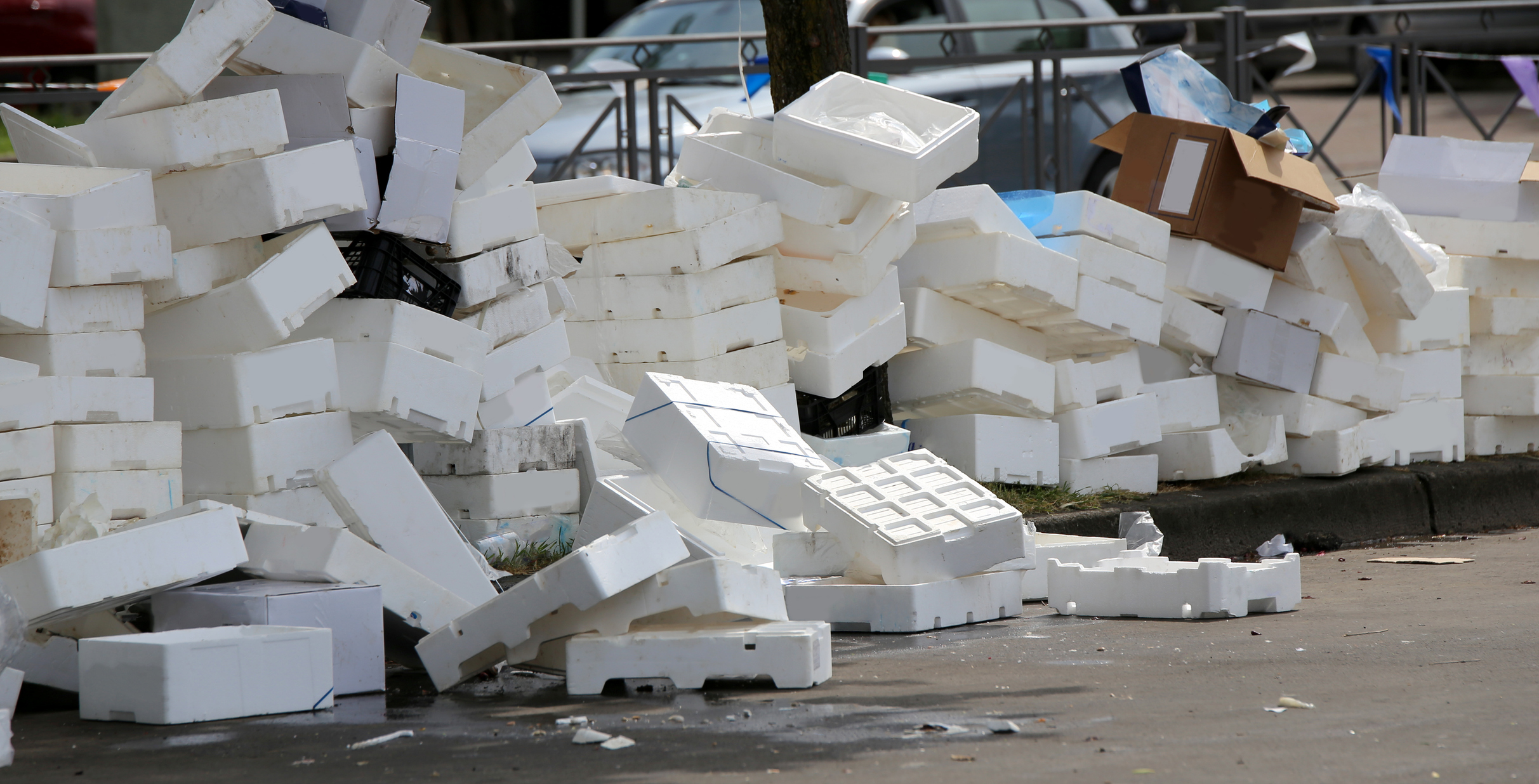
Polystyrene plastic impacts health, climate, and justice at every stage

Bending the curve down on plastics production is within reach. So is a meaningful Global Plastics Treaty.
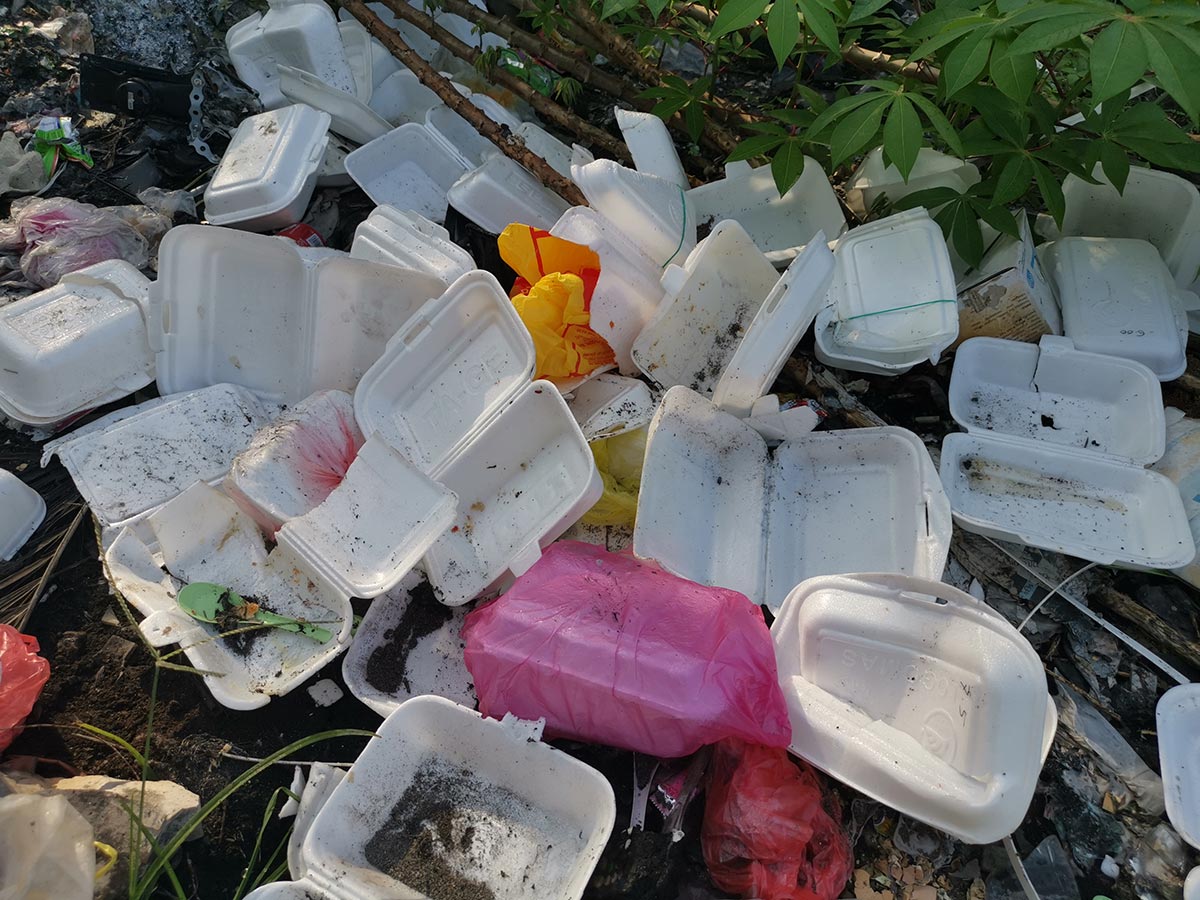
Polystyrene is the only major plastic whose production and domestic use are steadily declining. Let’s examine why.